Retaining Walls & Concrete Masonry
Expert retaining wall construction and concrete masonry work in Wilson, NC.
Why You Need a Retaining Wall
If your property has slopes, uneven terrain, or erosion problems, a retaining wall might be the solution. These walls do exactly what their name suggests: they retain soil and prevent it from sliding, washing away, or encroaching on usable space. A well-built retaining wall transforms unusable sloped ground into level areas for landscaping, driveways, or outdoor living. It also protects your property from erosion damage that gets worse every time it rains.
Retaining walls are not just functional, they add visual appeal to your property. A terraced yard with multiple retaining walls creates interesting levels and spaces for gardens, seating areas, or pathways. Walls can be purely utilitarian or designed as attractive features that enhance your landscaping. The key is building them correctly so they actually hold back the soil pressure they are designed to resist.
Many homeowners do not realize that retaining walls over a certain height require engineering and permits. The forces acting on these walls are significant, and failure can be dangerous and expensive. When you work with professionals who understand soil mechanics, drainage, and proper construction techniques, you get a retaining wall that will last for decades. Trying to save money with DIY or unqualified contractors often leads to walls that lean, crack, or collapse within a few years.
Types of Retaining Walls We Build
Different situations call for different types of retaining walls. The right choice depends on the height needed, soil conditions, appearance preferences, and budget. Here are the main types we install in Wilson.
Poured Concrete Retaining Walls
For walls over 4 feet tall or situations requiring maximum strength, poured concrete is usually the best option. We build forms, install reinforcing steel, and pour concrete to create monolithic walls that handle significant soil pressure. These walls can be designed with different finishes, from smooth and modern to textured or stone-like surfaces. Poured concrete works well for both residential and commercial applications where durability and strength are priorities.
Concrete Block Walls
Concrete masonry units allow us to build strong walls with a more finished appearance. We use reinforced concrete blocks with steel rebar and concrete fill in the cores for structural integrity. The exposed face can be standard block, split-face for texture, or various decorative block styles. These walls work well for heights up to 6 or 8 feet and offer good value for mid-range projects. They are also easier to repair than poured walls if damage ever occurs.
Segmental Retaining Walls
For shorter walls and residential landscaping, interlocking concrete blocks create attractive retaining walls without requiring mortar. These systems use gravity and the weight of the blocks to resist soil pressure. While some homeowners attempt DIY installation, proper base preparation and correct installation techniques are critical for walls that will not fail. We install these systems correctly the first time, with proper drainage and base compaction.
- Cantilever Walls: L-shaped concrete walls that use the weight of backfill on the footing to resist overturning, ideal for taller walls.
- Gravity Walls: Mass concrete walls that rely on their own weight to hold back soil, best for shorter applications.
- Tiered Walls: Multiple shorter walls stepped up a slope, reducing the load on each wall and creating terraced landscaping.
Choosing the right type of wall depends on your specific situation. During our consultation, we will evaluate your site, discuss your goals, and recommend the best solution for your needs and budget. The same careful planning we bring to foundation projects goes into designing retaining walls that perform correctly.
Critical Elements of Proper Retaining Wall Construction
Building a retaining wall that actually works requires attention to details that are not visible once the project is complete. These behind-the-scenes elements separate walls that last from ones that fail. Here is what we do on every retaining wall project to ensure long-term success.
Foundation is everything. Retaining walls need solid footings below the frost line, on undisturbed or properly compacted soil. We excavate to the correct depth, install gravel base, and pour reinforced concrete footings sized for the wall height and soil pressure. Shortcuts here guarantee problems later. A wall is only as strong as its foundation, and we never compromise on this critical step.
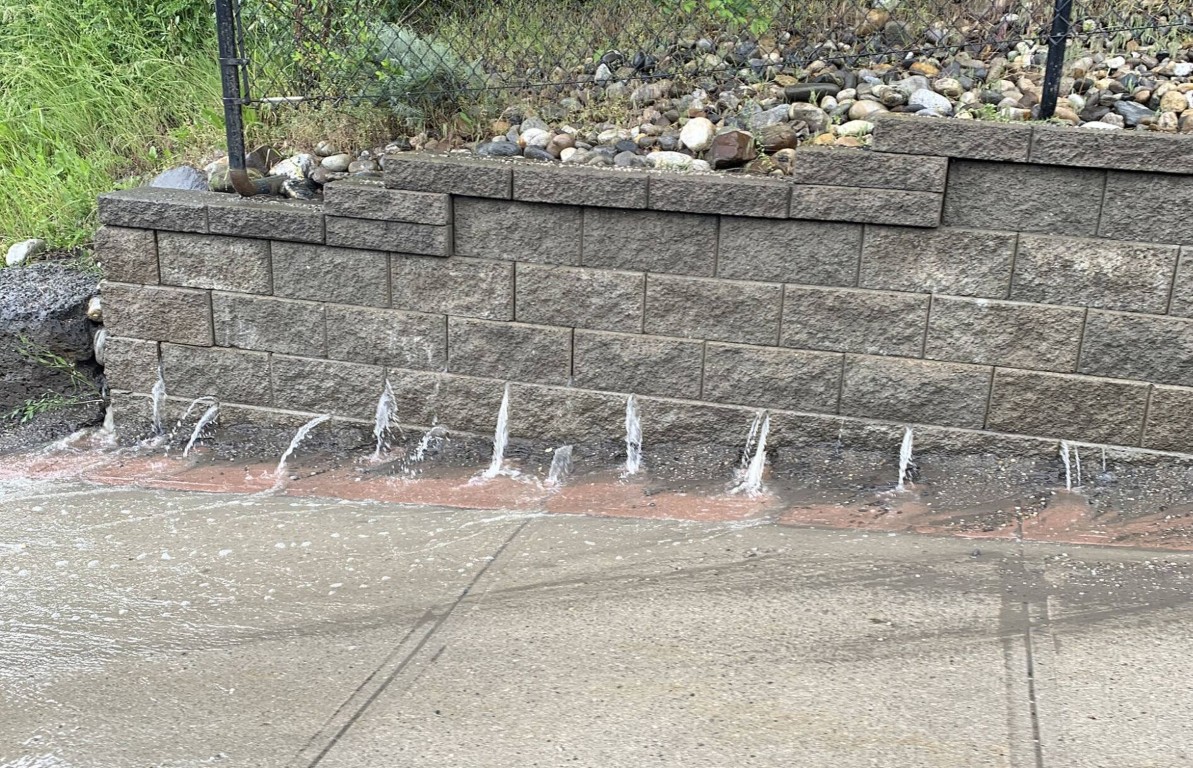
Drainage is the second most important factor. Water buildup behind a retaining wall creates hydrostatic pressure that can push the wall over. We install drainage systems including perforated pipes, gravel backfill, and weep holes to keep water from accumulating. Proper drainage also prevents soil saturation that increases pressure on the wall. Most retaining wall failures are drainage failures, not structural failures.
Reinforcement provides the strength to resist soil pressure. Depending on wall height and design, this might include steel rebar in concrete walls, geogrid fabric in the backfill, or deadman anchors extending back into the slope. We follow engineering specifications or industry standards for reinforcement placement and spacing. The goal is a wall that will not crack, lean, or collapse under the forces acting on it. When you need reliable construction, WLS Wilson Concrete delivers walls built to last.