Concrete Slab & Foundation Work
Expert foundation and slab installation for residential and commercial projects in Wilson, NC.
Why Your Foundation Matters
Your foundation is literally what everything else sits on. Whether you are building a new home, adding a garage, or constructing a shed or workshop, the concrete slab or foundation determines how long that structure will last and how well it will perform. A foundation that settles, cracks, or shifts causes problems throughout the entire building, from stuck doors and cracked walls to serious structural damage that costs thousands to repair.
In Wilson County, we deal with clay soils that expand when wet and shrink when dry. This soil movement puts constant pressure on your foundation. That is why proper site preparation, adequate thickness, and correct reinforcement are not optional extras. They are essential steps that separate foundations that last from ones that fail. We have seen too many homeowners learn this lesson the hard way after hiring contractors who cut corners to save a few dollars.
When you work with us, you get a foundation engineered for local soil conditions and built to code specifications. We do not guess at depths or skip reinforcement. We follow best practices that have been proven over decades of concrete construction. Your building deserves a solid base, and that is exactly what we deliver, the same standard you should expect from any experienced concrete pad contractor handling foundation work in your area.
Types of Concrete Foundations We Install
Different structures need different types of foundations. The right choice depends on your soil conditions, building size, local codes, and your budget. Here are the main types of concrete foundations we install in Wilson and the surrounding area.
Slab-on-Grade Foundations
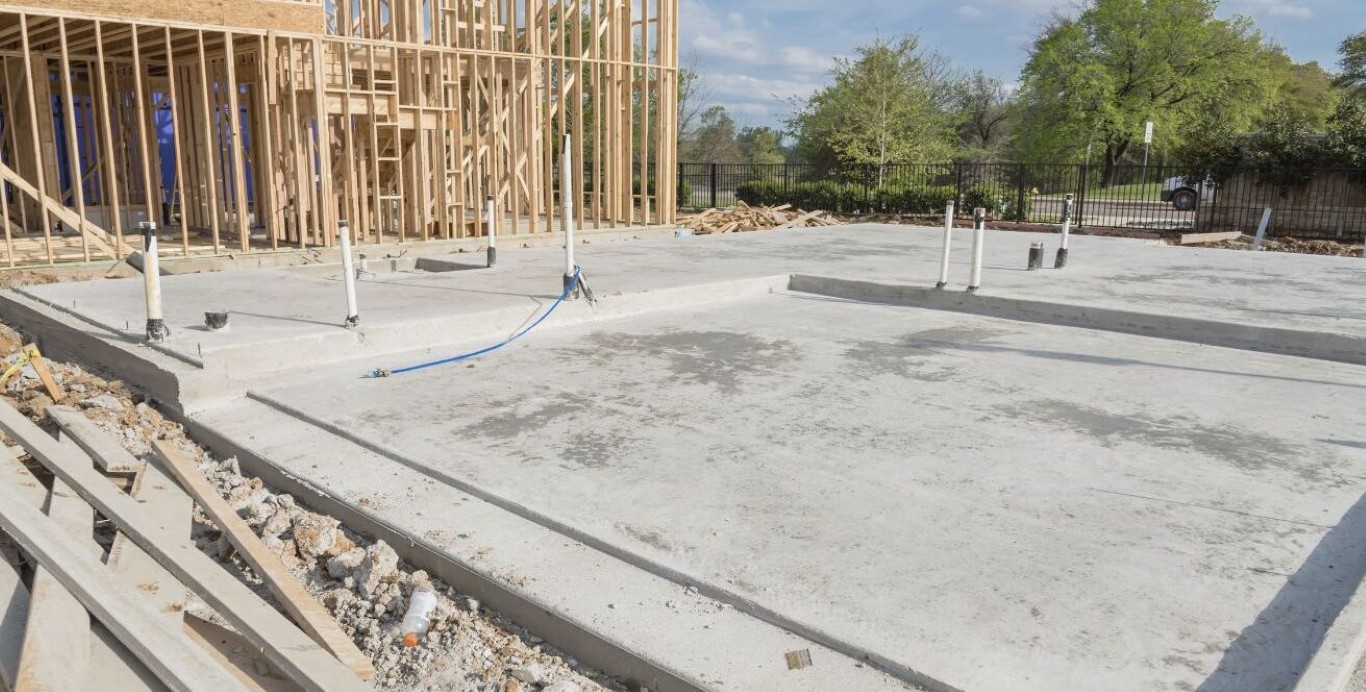
This is the most common type of foundation for homes and garages in our area. We pour a single thick slab of concrete directly on the ground after proper site preparation. The edges of the slab are thicker to support exterior walls, and we install reinforcement throughout. Slab-on-grade foundations work well in our climate because we do not need deep frost protection, and they are cost-effective compared to basements or crawl spaces. They also resist termites and moisture problems better than wood floor systems.
Stem Wall Foundations
Sometimes called a T-wall foundation, this type uses concrete footings below ground with short concrete walls that extend above grade. The floor can be a concrete slab or wood framing. Stem walls work well on sloped lots or when you want the building floor raised above ground level. They provide better drainage and air circulation than full slabs, though they cost more due to the extra forming and labor involved.
Footings for Addition and Structures
If you are adding onto an existing building or constructing a pole barn, carport, or covered porch, you will need individual footings to support posts or walls. We dig below the frost line, pour concrete footings to the required size and depth, and install anchor bolts or rebar as needed. These footings must match or exceed the depth and strength of your existing foundation to prevent differential settling.
- Residential Foundations: New home construction, garage additions, and accessory buildings like sheds and workshops.
- Commercial Slabs: Retail spaces, warehouses, office buildings, and industrial facilities requiring heavy-duty concrete.
- Equipment Pads: Concrete bases for HVAC units, generators, pool equipment, and other mechanical systems.
No matter what type of foundation your project requires, we have the experience and equipment to handle it. From small shed slabs to complete home foundations, we approach every job with the same attention to detail and commitment to quality that has earned us our reputation in Wilson, NC.
Our Foundation Installation Process
Installing a foundation is not something you can rush or shortcut. The process takes time, but each step is necessary to ensure your building has a stable, level base that will not settle or crack. Here is how we do it right.
Site preparation comes first. We clear and level the building area, then excavate to the proper depth based on your soil type and local code requirements. In areas with poor soil, we may need to dig deeper and bring in compacted fill material. We check the elevation and grade to ensure proper drainage away from the foundation. This groundwork is critical because you cannot fix a bad base after the concrete is poured.
Next we install the forms, which are temporary wood or metal frames that hold the concrete in shape while it cures. We double-check all measurements and make sure the forms are level and properly braced. For slab foundations, we install a gravel base layer and compact it thoroughly. Then comes the reinforcement, either rebar or wire mesh depending on the load requirements. We also install any necessary plumbing or electrical conduits that need to run under the slab.
On pour day, we bring in concrete trucks and work quickly to fill the forms. The concrete must be spread and finished before it starts to set, so this part requires a skilled crew working together. We use laser levels and screed boards to ensure a perfectly flat surface. After the initial set, we apply the final finish and cut control joints if needed. Then comes the most important part that many people do not understand: the curing process.
Concrete does not dry, it cures through a chemical reaction that takes weeks to complete. During the first 7 to 10 days, we protect the slab from temperature extremes and keep it from drying out too quickly. This is when concrete develops its strength. Rushing this step or exposing fresh concrete to freezing temperatures can permanently weaken your foundation. When you hire professionals like us who understand these details, you get a foundation that will support your building for decades. The same careful process applies whether we are building residential driveways or commercial slabs.